AI visibility platforms with SEO capabilities: one tool or two, and how to tell which you need
Roughly a third of the queries in our early 33-keyword harvest drew a citation for nobody at all. No page won at any quality level, because there was nothing cited for anybody to win — we published that finding, and it is the one fact that decides this purchase.
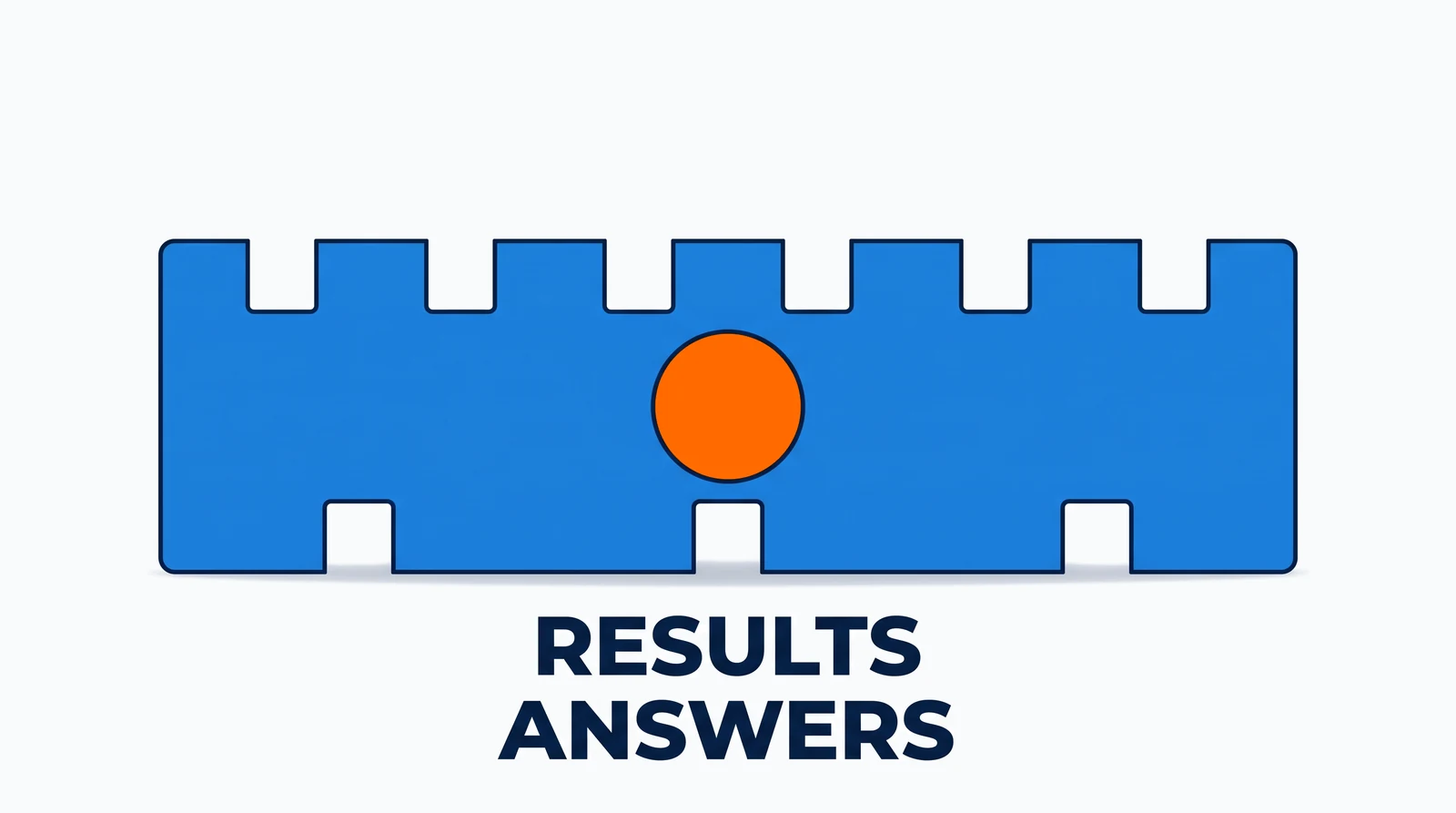
Here is why. A results page exists behind any question a buyer can type, and you can open it and look; your site is somewhere on it or it is not. An AI visibility tracker can honestly have nothing to report, because for a good share of real questions the answer names no sources at all and there is no citation slot to be won. Two instruments sit in the same dashboard row and they do not fail the same way.
So this article does not rank products and does not name a winner. It sorts out what each half of a combined platform can measure, shows the measurements underneath that, and hands you a check you can run on your own questions in about an hour before you spend anything. And the disclosure belongs at the top rather than the bottom: LiamVi is a self-hosted SEO and AI-visibility platform, which makes us one of the products this article is asking you to interrogate. Read everything below knowing that, and hold us to the same test we are asking you to apply to everyone else.
What does a platform with both SEO and AI visibility actually combine?
An AI visibility platform with SEO capabilities combines two different instruments in one login: one that reads a page of search results, and one that samples what assistants said when they were asked a question.
The first is the work most teams already own. Rank tracking records where your pages sit for a keyword list. A site audit records what a crawler found. A content score rates a draft against some model of what performs. All three read objects that sit still long enough to be read twice, and all three have a ground truth you can open in a browser and check for yourself.
The second job samples answers. It asks a set of questions of a set of assistants, on a schedule, and records what came back: whether your brand was named, whether a page of yours was cited as a source, which other sites were. The AI half has no single page you can open and verify, because the thing being measured is a generated answer that may not repeat.
The market has now sorted itself into two shapes around those jobs, and you can check that on the vendors' own pages rather than taking our word for it. Of the four products we opened on 4 September 2026, two sell both instruments in one platform and two sell the AI half on its own. We quote each in its own published wording. This is our scope, not a census of the market, and it is not a ranking — we hold no like-for-like comparison of these products' quality, and we know of nobody who has published one.
Two of them sell both halves:
- Surfer puts both surfaces in one line at the top of its site: "Boost visibility in Google, AI Overviews, Gemini, ChatGPT, Claude, Perplexity and beyond." Surfer's platform menu carries "Monitor AI Search Visibility — Track how your brand appears in AI tools like ChatGPT" beside "Create Content that Ranks — Write articles that rank — fast — using real-time SEO data" and "Track & Analyze Sites — Get a complete SEO audit and plan in minutes, not weeks."
- Ahrefs' Brand Radar offers to "Track and grow your brand's visibility across AI answers, YouTube, and Reddit. Turn SEO into AEO and reach new audiences." The Ahrefs product menu lists "Rank Tracker — Monitor your rankings in search engines" and "Brand Radar — Track your brand's visibility in LLMs" as neighbours, with "Custom Prompts — Track the AI prompts that matter most" beneath them.
Two sell the AI half on its own:
- Profound titles its site "Optimize Your Brand's Visibility in AI Search". Profound's platform menu names, among other entries, Monitor, Answer Engine Insights, Prompt Volumes, Shopping and Agent Analytics, and we saw no traditional rank tracker in it on 4 September 2026 — a description of what the page listed that day, not a claim about what the product can do.
- Peec AI describes itself as "AI search analytics for marketing teams". Peec AI offers to "Track, analyze, and improve brand performance on AI search platforms through key metrics like Visibility, Position, and Sentiment".
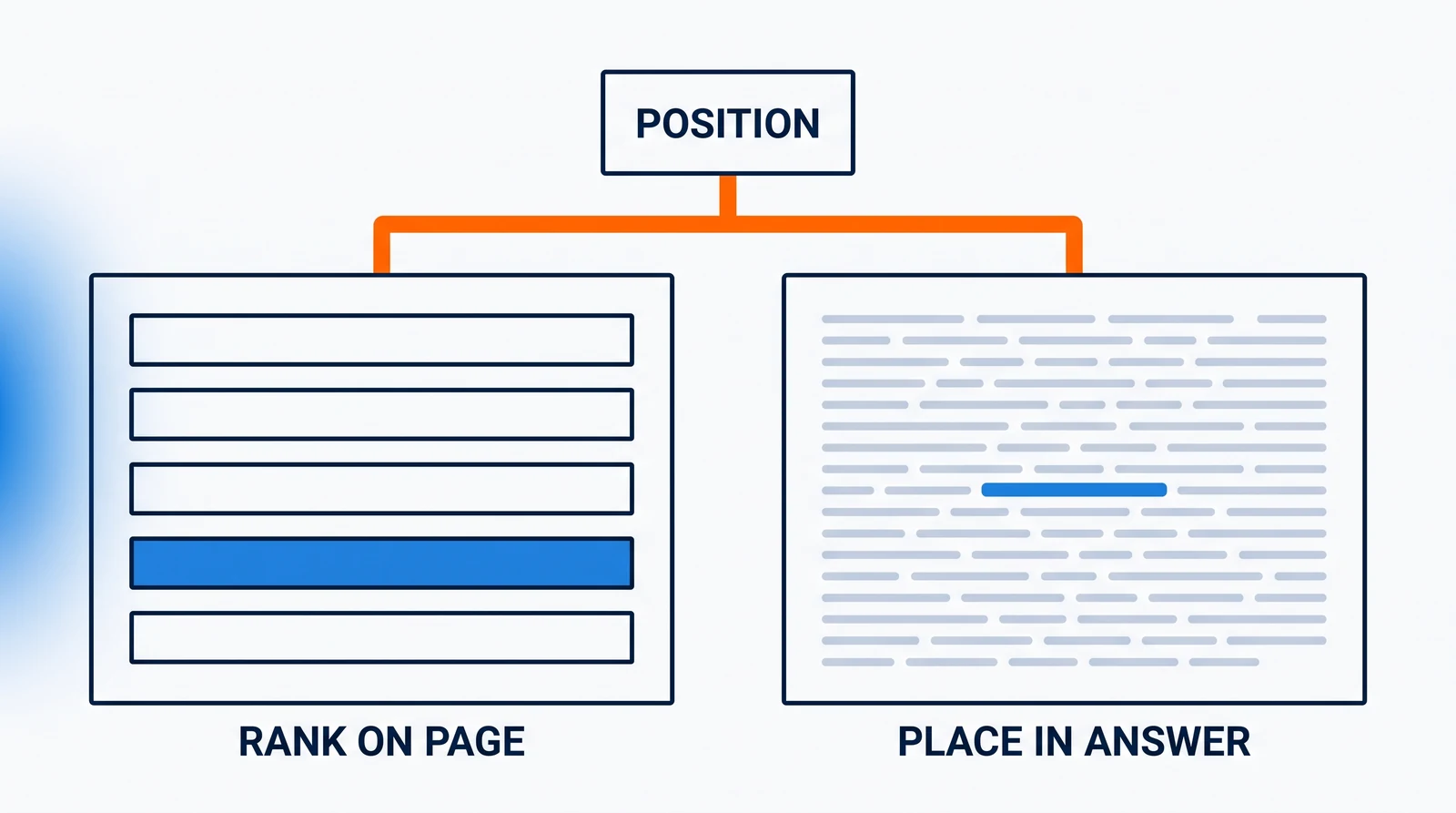
One word in that last line is worth carrying into any demo you sit through. The word "position" means a rank on a results page in a classic SEO tool and a placement inside a generated answer in an AI search product. We have not tested what any particular vendor's figure counts underneath, and we are not going to guess. A buyer reading a combined dashboard should ask which meaning is on the screen, because two columns can carry one word and answer two different questions.
Which of these to buy is a separate question, and we wrote it up as what these tools measure and how to judge one; this piece is about whether you need one of them or two.
Is AI visibility the same job as SEO, or a second job?
AI visibility and SEO are one job by Google's published account and two instruments by our own measurements. Both can be true at once — the work can be one discipline and the reading still take two instruments — and it is the reading you are buying.
Google's guide to AI features in Search, last updated 10 July 2026, takes the two industry acronyms and declines both: "From Google Search's perspective, optimizing for generative AI search is optimizing for the search experience, and thus still SEO." Read the scope on that sentence as carefully as the sentence itself. Google's guide is Google's position about Google's own generative results, and it carries no authority over ChatGPT, Claude or Perplexity. Those three are the surfaces most of this category's products are selling you a view of.
Take Google entirely at its word anyway, and the tooling question is still open. Even if the work is one discipline, the reading is two readings, because they come from two instruments that fail in different ways. One reads a stable artefact that is there to be read. The other samples a moving system and can return nothing at all — not "you scored badly", but "there was no question here to be answered by a source".
There is a second reason to treat them as two readings, and it is ours. In our 33-keyword harvest we recorded 276 pages that ranked and 73 pages ChatGPT actually cited for the same queries, and 9 pages sat in both sets — the counts and their limits are published there with the method. For this decision, one line of that is enough: a strong report from the first instrument is not evidence about the second. What the number in either tool actually counts is a subject of its own.
Why can an AI visibility reading be empty when a results page always exists?
An AI visibility reading can be empty because a citation exists only where an assistant actually went and looked. A results page, by contrast, is there for any query a person can type, whatever it happens to contain.
That gate is the finding this article rests on. Roughly a third of the queries in our early 33-keyword harvest drew a citation for nobody at all — no source named in the answer, for any site. That no assistant search ran is our read of why, drawn from the mechanism OpenAI publishes about its own product and quoted below rather than from a log we could open. On either reading no page won those queries, and none could have. The limits sit beside the figure: 33 keywords across three related industries, measured mostly on ChatGPT, small and early, and the sweeps run weekly so the proportion can move. It is not a law about the web. It is what we observed, and it was large enough to change how we advise people to spend money.
The rank half has limits of its own, and they are a different shape. Surfer's documentation says its rank tracker shows only keywords and URLs that rank in the top 100, and Ahrefs has published that since Google stopped serving 100-result pages a small percentage of queries still do not come back with the full top 100. Those are gaps in an instrument's collection rather than a missing object: the results page is still there for you to open and read. An empty citation slot is the opposite case — the thing being measured was never in the answer at all.
The engines describe the same gate from their side. OpenAI's post introducing ChatGPT search, published 31 October 2024 and updated twice since, puts it in one sentence: "ChatGPT will choose to search the web based on what you ask, or you can manually choose to search by clicking the web search icon." By OpenAI's own description, ChatGPT makes that decision before any page is considered, and it makes it about the question rather than about your content.
There is a limit on how far that mechanism can be pushed, and it is ours as much as anyone's. OpenAI's help documentation for ChatGPT search says that responses using web search "may include citations" and that "search results and citations can be incomplete, outdated, or incorrect", so an empty source list is not by itself proof that no search ran. What a sweep counts is what the answer displayed, which is why we publish the empty answers as empty answers and mark the retrieval story as a read. Neither OpenAI nor we publish how often a search runs and cites nothing. For a buyer the two cases land in the same place: there was no citation in that answer for anybody to win.
Nor is the gate random. We ran a pre-registered test in which the topic was held constant and only the phrasing varied, with the prediction written down before the run. As our research page records it, "none of the conceptual 'what is X' framings triggered source retrieval on the engine we measured, while every dated, comparison-shaped framing did". The limits travel with that: five topics, one engine primarily, and engines differ — Perplexity, for one, cites far more freely. The direction held across every topic we varied, and the exact rates are not portable, so we do not offer them as a rule.
Now put those two instruments back in the same report. Your page ranks fourth for a question, and the AI half of the dashboard shows nothing for that same question. That is not a contradiction, and it is often not about your content at all — the answer may simply have named no sources, in which case there was no slot for anybody. A rank tracker cannot tell you that the slot was empty, because emptiness is not a thing it measures. A combined platform cannot tell you either, unless it separates "nobody was cited" from "no search happened" and shows you which of the two you are looking at.
The size of the AI job is a property of your question set, not of the product you buy. Two companies can buy the same platform and get honest value from it in completely different proportions, because their buyers ask different kinds of question. No feature table can tell you which of those companies you are. You can find out yourself, and it costs nothing.
How do you size the AI half for your own questions before you buy anything?
You size the AI half by asking ten of your real buyer questions of two assistants on two separate days and counting the answers that cited nothing at all. Out of ten questions, the number that never drew a citation from anybody is the figure you are after.
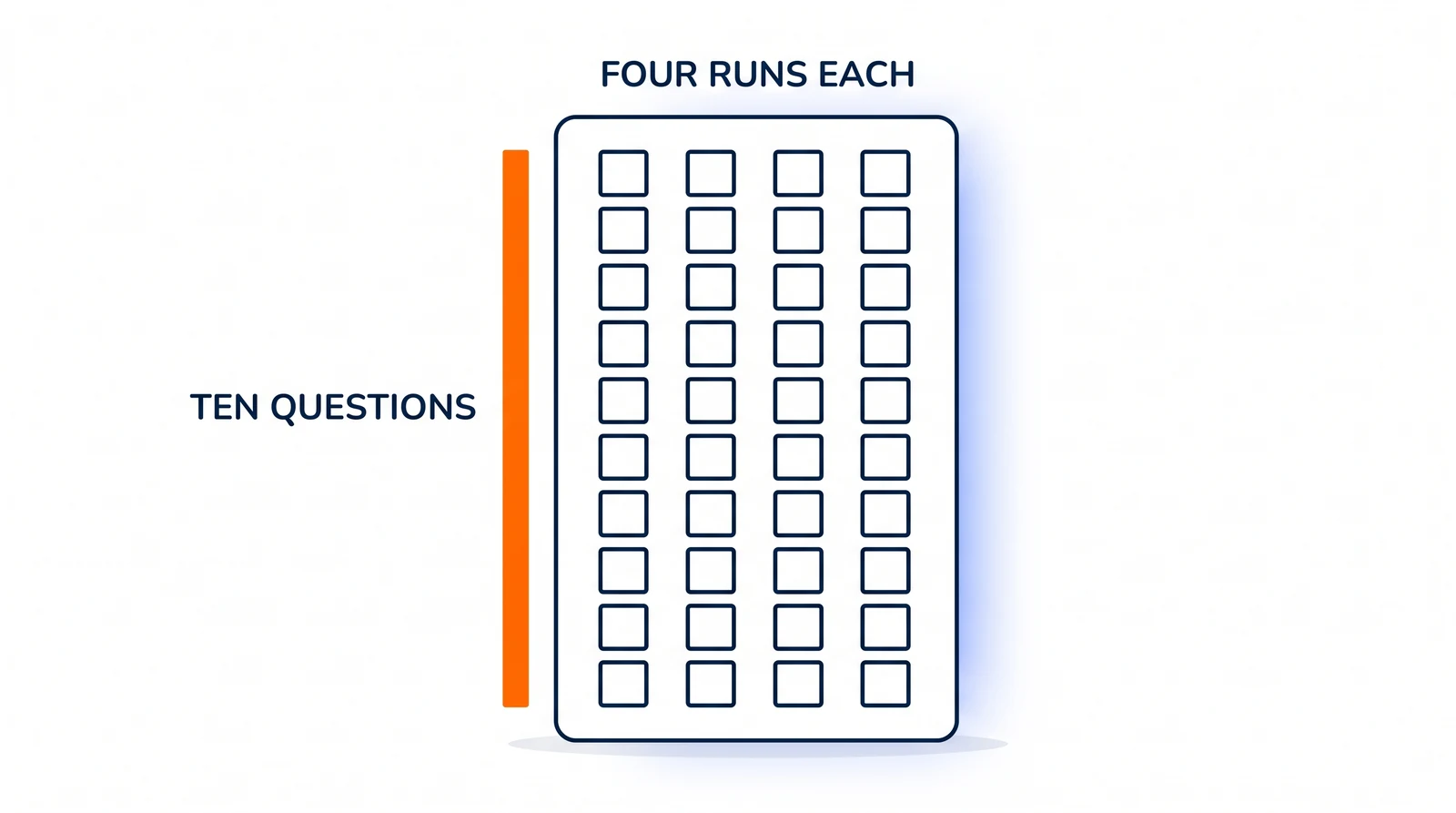
That is 10 questions × 2 assistants × 2 days — 40 observations, about an hour spread across a week, and no paid tool, because the assistants are free to ask. Use the questions your buyers genuinely type, phrased the way they would phrase them, not the keywords in your rank tracker. Pick the two assistants your market actually uses; if that is ChatGPT and Gemini, use those.
For each run, write down three things:
- Did it cite any sources at all? Look for the citation links, and where the answer shows none in the prose, open the sources panel if the assistant offers one — OpenAI's help pages describe that panel as holding "cited sources and other relevant links", so an answer can carry sources you have to click to see. An answer with no sources anywhere is a question where there was no citation for anybody to win that day, and it is the case that matters most here.
- Did your brand appear, cited or merely mentioned? A mention without a citation tells you the assistant knows the name but did not use your page as a source, and those are two different problems with two different fixes.
- Which other sites were cited, if any? The sites being quoted in your buyers' questions are the ones holding the slots you would be buying a tool to chase, and opening them tells you more than any count of them.
The first column is the one you are really collecting, and the counting rule matters more than it looks, so here it is exactly. The denominator is your ten questions, not the forty observations. A question counts as empty only when all four of its runs — both assistants, both days — cited nothing at all. A question that came back empty once and cited once is not empty; it goes in the mixed pile, and the mixed pile is a reading of its own, below. What you end up with is a count out of ten, and that fraction is the part of your question set where no AI visibility exists to be won today. No vendor has to hand it to you, and none of the four product pages above does.
One limit belongs on this number where you calculate it, not further down. Answers vary between runs on identical questions — we have observed it ourselves and published the check that tests it, where the point is that a dashboard whose numbers never move should worry you more than one that wobbles. Four runs per question is a spot-check rather than a variance study: enough to separate a question set that mostly fires from one that mostly does not, and not enough to put a decimal place on the fraction. We would not put one there either.
Three readings of the result, and they point in different directions:
- Mostly empty. The AI half of the job is small for your business right now, and a second subscription would buy you a dashboard of zeroes that are facts about your questions rather than about your pages. The cheaper move is upstream: change the questions you publish against, because framing is the lever our own pre-registered ladder moved.
- Mostly firing, with other sites being quoted. The AI half is contested ground for your questions, and contested ground is worth measuring properly rather than watching from the corner of a combined report.
- Mixed. The split between the empty questions and the firing ones is itself the finding, and it tells you which questions are worth tracking on the AI side and which are noise. That is the same decision a prompt list forces on you at setup, made on evidence instead of guesswork.
A related check exists for people who already pay for a platform and want to test its read-out against their own runs; that one is about variance and agreement, and it lives in our guide to AI visibility analytics. The check above is the pre-purchase version, and its output is different: not whether the tool is right, but how much there is for it to see.
Read this method as our view of what matters, shaped by the platform we built rather than as a neutral standard. That is the honest framing for any procedure written by somebody selling in the category, and it applies to us first.
When is one platform enough?
A single combined platform covers you when classic search still pays for your traffic and the product keeps the two readings apart on screen. A third condition sits underneath both: most of your buyer questions already draw a citation for somebody, so there is something for the AI half to report.
Four conditions favour the single tool, and they are stated as conditions rather than as advice:
- Most of your questions fire retrieval, but you do not yet need depth. You want to know whether assistants are quoting you and roughly which way that is moving. Direction over months, on a fixed question list, is a reading a combined product can support.
- The team is small and the report has to be read by somebody else. Two subscriptions mean two sampling methods, two sets of definitions and two logins, and somebody has to reconcile them every month. One prompt list beside one keyword list, in one report, is worth real money in a team of three.
- Your rank data still explains your revenue. If traditional search is the funnel that pays, the instrument that watches it is the one that deserves the budget, and the AI half is an addition rather than a replacement.
- The vendor separates the two kinds of nothing. A combined product that can show you which of your tracked questions returned no sources at all is answering the question this article is about, inside its own dashboard. That is a genuine capability and it is worth asking for by name.
Whether those conditions describe you is not something we can tell from here. You know your buyers, your funnel and what your team can actually keep up with; we know what we measured about citations, which is a smaller thing.
When is one platform not enough — and when is neither?
One platform stops being enough when it does not sample the assistant surfaces your buyers use, or when it blends the two readings into one figure you cannot take apart. Neither tool is the right purchase yet when almost nothing in your question set draws a citation for anybody.
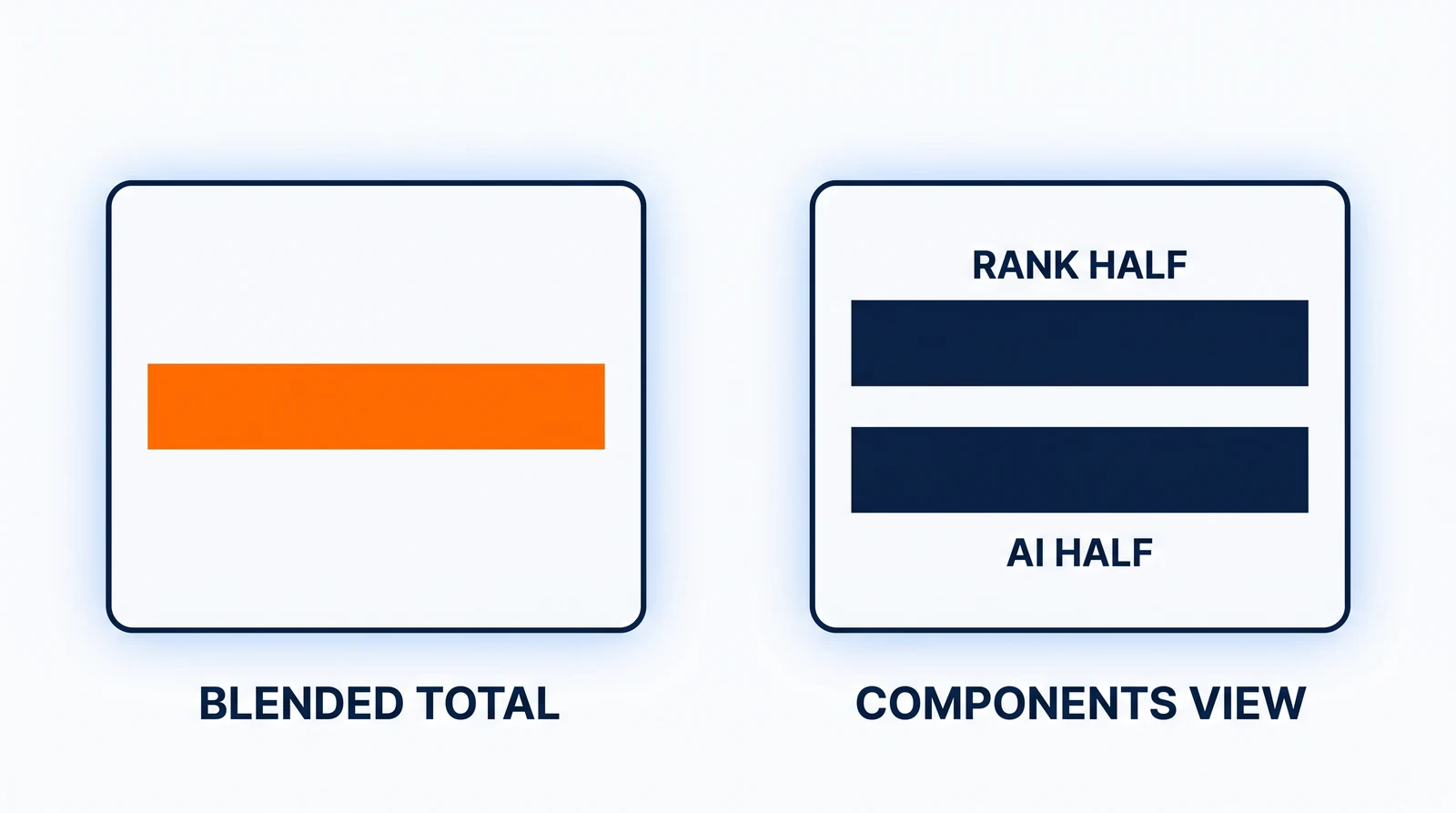
The blending problem is the practical one. A headline number that folds rank data and citation data together moves when either moves, and you cannot tell which one did without seeing the components. That gap matters most exactly when the number is going your way. Ask any vendor to show you the two halves separately before you decide the blended figure is useful.
The surface problem is simpler and harder to fix. Products in this category sample different sets of assistants, and the lists change between the day a vendor publishes one and the day you buy. If your buyers live somewhere a combined platform samples thinly, the depth you need may only exist in a product that does nothing else. That is a coverage question, answered by reading the vendor's own current list rather than by a category argument.
There is also a reason to take the AI half seriously that has nothing to do with the size of your domain. Across 21 matched pairs in our harvest — same keyword, one higher-authority domain against one lower — the higher-authority domain won 11 and lost 10. The limit rides with it: 21 pairs rule out a decisive authority effect in this sample, not a small one. We used the same finding in our guide to checking a platform's data accuracy. A small site is not automatically shut out of citation slots the way it can be shut out of a competitive first page, which makes the AI half ground worth measuring rather than conceding.
And then the case nobody in this market will sell you. Sometimes the honest answer is neither, yet. If almost nothing in your question set produced a citation for anybody when you ran the check above, then no tool — combined, dedicated, ours or anyone else's — has anything to show you this quarter. The work is upstream: publish against questions that are dated, comparison-shaped and specific enough that an assistant goes looking, then measure. We think buying a monitor for a signal that is not there is a common waste in this category, and we mark that as a belief because we have not counted it — but the check above costs an hour and settles it for your own business. Saying so costs us a sale too.
What should you ask a vendor selling both halves?
Four things are worth putting to any vendor that sells both instruments, and all four are about the join between them rather than about either one alone. The join is the thing you are actually buying when you buy a combined product.
Read them as our view of what matters, shaped by what we build, and not a neutral standard. We have answered each of them for ourselves below, including where our answer is thin.
1. Does the platform report the two readings separately, or only blended? A components view lets you say which half of the report moved this month, and a blended total never can. We are one of the platforms this question is aimed at, so ask it of us as well, and ask to see the two halves before you accept any headline total — ours included.
2. Can it tell you which of your tracked questions returned no sources at all — as distinct from "you were not cited"? A platform that shows both cases as the same empty cell has handed you a reading you cannot act on, because the two call for opposite responses. Flagging questions where measured retrieval is zero is a thing we built deliberately, because it is the finding that changed our own advice.
3. Does the AI half state its sampling cadence, and is it the same cadence as the rank half? A monthly AI sample sitting beside daily rank data is one report carrying two resolutions, and nothing on the screen usually says so. Our own sweeps run weekly and the dataset grows with them.
4. Does the word "position" mean the same thing in both halves of this product? Ask them to define it twice, once per half. It is a small question that tends to reveal how carefully the two products were joined.
None of the four asks a vendor to be flattering, and all four have checkable answers. A product that survives them is not thereby the right one for you; it is merely one whose claims you can test, and testable is the entire difference between a measurement and a confident sentence.
What people actually ask us
People ask us five questions whenever this decision comes up, and each one is answered below on its own terms rather than folded into the argument above.
Which AI is best for SEO content? We have not measured AI writing tools against each other and we are not going to guess, because a comparison we have not run is exactly the kind of confident sentence this desk exists to avoid. What we have measured is which pages get cited once an assistant does search, and the properties those pages share: self-contained sentences, specific figures, named things, and something the other pages on the subject do not already say. That finding is about the writing rather than about the tool that helped produce it.
Which AI agent is best for SEO? The distinction worth carrying is what any agent can and cannot observe. It can read your pages, your server logs and a sample of answers it collects itself. What it cannot read is a retrieval log for the consumer assistants this category samples, so an agent telling you why you were or were not cited there is inferring rather than measuring. That limit is about the surface, not about measurement in general: OpenAI's Responses API does report web-search activity to the developer making the call, including whether a search ran and which URLs it retrieved. Nobody gets that view of somebody else's ChatGPT session. We have also run no comparison of agents, and we are not going to guess at one.
Can AI do SEO optimization? Parts of it, and the line between the parts is worth keeping. Measured: assistants sample and summarise faster than a person, and tools built on them can collect answer data at a scale a human cannot. Believed, and marked as belief: we think the judgement calls — which questions matter to your buyers, what your business genuinely knows that others do not — stay human for now, because they depend on knowledge that is not in any index. We have not tested that, and we would not want you to take it as though we had.
What is AI visibility in SEO? AI visibility is whether an assistant names or cites you in the answer it generates, as distinct from where your page sits on a results page. It is measured by sampling answers rather than by reading rankings, which is why it needs its own instrument and its own vocabulary. We set out the definitions, and what a tool has to do to measure them honestly, in our guide to what these tools measure.
I have neither tool yet — where do I start? Start with the check in this article, because it costs an hour and tells you whether there is anything to buy for. If you want the ground floor underneath all of this first — what the work is, in plain language, before any product enters the conversation — we wrote a beginner's guide to AI search optimization for exactly that reader.
What we cannot tell you
We cannot tell you whether buyers of combined platforms end up better or worse off than buyers of two separate tools, because we have not measured it and we know of nobody who has published it. This article is careful not to imply an answer to that question anywhere.
Our citation dataset is 33 keywords across three related industries, measured mostly on ChatGPT. That is small and early, and every figure above inherits the limit. Gemini, Perplexity, Claude and Google's AI results are sampled far more thinly by us, and they behave in their own ways.
We hold no like-for-like quality comparison of the four products named above either. They appear because they are the clearest published examples of the two shapes on the day we read them, and for no other reason.
And no score, ours included, is a probability of being cited. Anyone selling you a guaranteed citation is selling you the dashboard rather than the outcome.
Our sweeps run weekly and the dataset grows with them, so the share of questions that draw no citation at all is a number we expect to move. When a conclusion stops surviving the data we correct it in public rather than quietly, and if that share changes in either direction we will publish the new figure and say what it changes about the advice above.
Sources
- LiamVi — How to get citations from ChatGPT — the share of queries in our early sample that drew a citation for nobody, and what fired retrieval instead. Verified 4 September 2026.
- LiamVi — Research: our methods, our samples — the 33-keyword harvest and its limits, the pre-registered framing ladder, the 21 matched authority pairs, and the ranking-versus-citation overlap counts. Page last updated 12 August 2026; verified 4 September 2026.
- LiamVi — The best AI visibility tools in 2026: what they measure, and how to judge one — the definitions, and the questions that separate a verifiable tool from a confident one. Verified 4 September 2026.
- LiamVi — The best accurate data platform for AI search optimization in 2026 — the matched authority pairs and how to check a vendor's data yourself, including its run-to-run variance. Verified 4 September 2026.
- LiamVi — AI visibility analytics for search optimization — what a tracking number counts and what a score is measured against. Scheduled to publish 7 September 2026.
- LiamVi — The best AI search optimization platform for beginners — the plain-language starting point. Verified 4 September 2026.
- Google Search Central — AI features and your website — Google's position that optimizing for generative AI search is still SEO, scoped to its own search experiences. Last updated 10 July 2026; verified 4 September 2026.
- OpenAI — Introducing ChatGPT search — the assistant chooses whether to search the web based on what you ask. Posted 31 October 2024, with in-page updates through 5 February 2025; checked 4 September 2026.
- OpenAI Help Center — Searching the web with ChatGPT — responses that use web search "may include citations"; the Sources panel holds "cited sources and other relevant links"; results and citations "can be incomplete, outdated, or incorrect". Checked 4 September 2026.
- OpenAI — Web search in the Responses API — the `web_search_call.action` values and the `sources` field that report search activity to the developer making the call. Checked 4 September 2026.
- Surfer — "Boost visibility in Google, AI Overviews, Gemini, ChatGPT, Claude, Perplexity and beyond", and the platform menu quoted above. Read 4 September 2026.
- Surfer — Rank Tracker documentation — only keywords and URLs ranking in the top 100 are shown. Read 4 September 2026.
- Ahrefs — Brand Radar — "Turn SEO into AEO", with Rank Tracker and Brand Radar in the same product menu. Read 4 September 2026.
- Ahrefs — An update on recent Google changes to SERP monitoring — "&num=100" no longer functions as before, and a small percentage of queries still do not return the full top 100. Posted 3 October 2025, updated through 14 November 2025; checked 4 September 2026.
- Profound — "Optimize Your Brand's Visibility in AI Search", and the platform menu as it stood. Read 4 September 2026.
- Peec AI — "AI search analytics for marketing teams", reporting visibility, position and sentiment. Read 4 September 2026.